

Long-e-Vity
Longevity Medicine
Āyuṣmān nirogaśca bhava
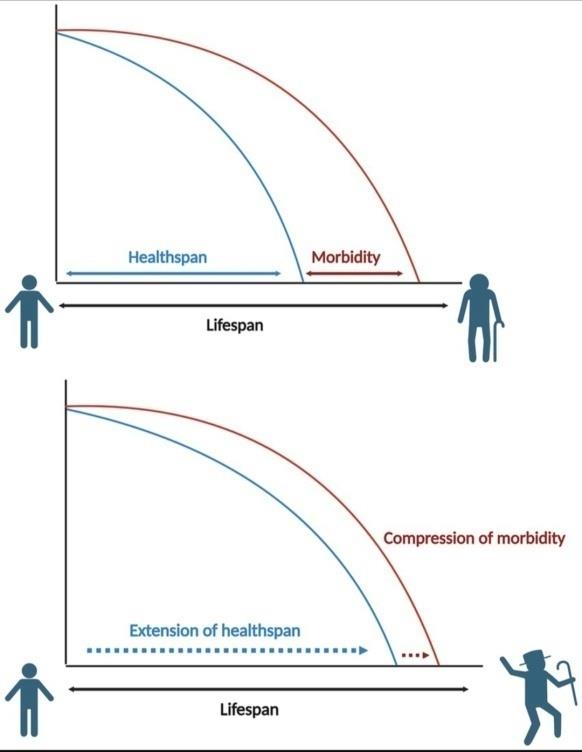
LONGEVITY MEDICINE is an evidence-based clinical discipline that shifts healthcare from a reactive model of treating established diseases to a proactive framework focused on extending healthspan (the period of life spent in optimal physical, metabolic, and cognitive health).
Individualized and data-driven, rather than merely increasing chronological lifespan, the core goal of Longevity medicine is to slow the biological aging process by overcoming age-related physiological and pathological processes, identify physiological vulnerabilities and chronic disease risks years before symptoms emerge, and preserve functional independence, vitality, and resilience across the adult lifespan.

How is it different from Modern Medicine?
- Modern medicine treats existing diseases extending lifespan, whereas longevity medicine prevents and manages age-related diseases, reverses conditions, and enhances healthspan.
- Modern medicine uses pharmacological and surgical interventions; longevity medicine combines modern medicine with personalized nutrition, lifestyle, wellness and activity recommendations.
- Modern medicine views diseases as independent entities, while longevity medicine recognizes the interconnections of aging and diseases.
- Modern medicine has a reactive approach to illness, whereas longevity medicine takes a proactive approach to health by leveraging the foundations of aging biology.
Reproduced from ‘Frontiers in Nutrition’
Clinical Goals
The Core Fundamentals of Healthy Living
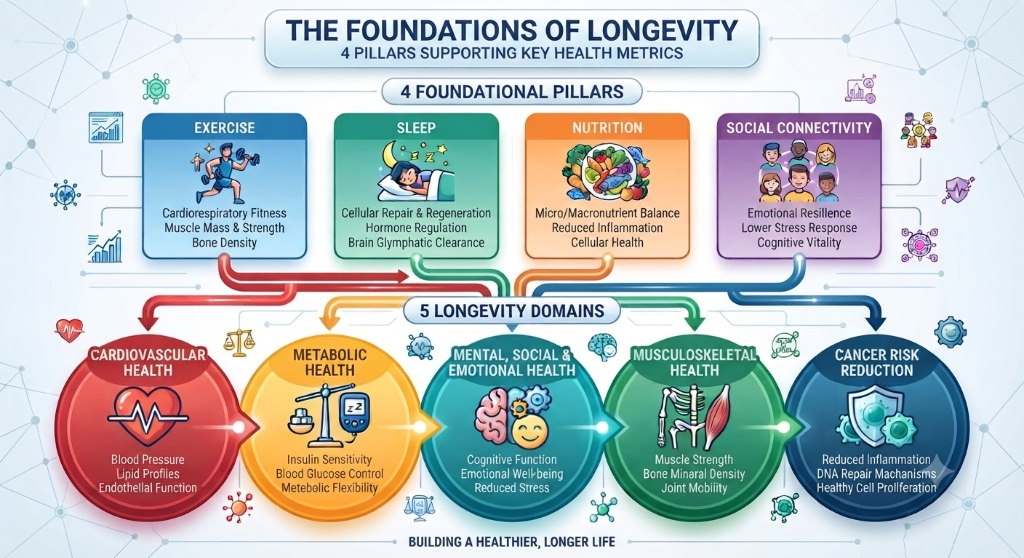
- Foundational Lifestyle Pillars: Consistent resistance training, cardiovascular conditioning (such as optimizing VO2max), adequate sleep hygiene, reducing cancer-risk and a nutrient-dense diet dictate the vast majority of long-term health outcomes.
- Standard Clinical Risk Factors: Basic, widely available diagnostics—such as standard lipid panels, blood pressure monitoring, fasting glucose, and HbA1c—capture the vast majority of modifiable morbidity and mortality risks.
- Functional Metrics: Objective measurements of physical reserve, including grip strength, balance, and muscle mass index.
Major determinants of Longevity
1. Cardiovascular Health
Atherosclerosis prevention, ApoB testing, endothelial function, VO2 Max, and structured Zone 2 training.
2. Metabolic dysfunction and Gut health
Overcoming insulin resistance, the 5 criteria for metabolic syndrome, visceral fat risks, and CGM insights.
3. Mental, Social and Emotional well-being
Emotional regulation, social connection, non-negotiable sleep protocols, and cognitive resilience.
4. Musculoskeletal health
Preserving muscle mass (countering sarcopenia), bone mineral density, grip strength, and joint mobility across the adult lifespan.
5. Cancer risk
Lowering systemic chronic inflammation, enhancing DNA repair mechanisms, and proactive early screening protocols.
TO UNDERSTAND YOUR LONGEVITY SCORE
Take our comprehensive assessment to evaluate your lifespan and healthspan determinants.
“The time to repair the roof is when the sun is shining.”
— John F. Kennedy
ADVANCED BIOMARKER PROFILING
Multi-omics, deep epigenetic clocks, continuous metabolic tracking, or extensive panels looking at specialized proteins (like alpha-Klotho or suPAR) offer granular, data-driven insights into biological aging & metabolic efficiency and serve as tools for optimization of healthspan expansion.
Advanced profiling becomes useful when fundamental habits are already optimized, and there is a specific, actionable clinical question to answer.
An expensive epigenetic clock or expansive cytokine panel cannot override unaddressed basics like hypertension, poor sleep, sedentary habits, or an unmanaged diet.
Value vs. Limitations of Advanced Panels
What Advanced Biomarkers Provide
- Early identification of subtle metabolic drift, chronic low-grade inflammation (via markers like hs-CRP), or atherogenic particle load (like ApoB/LDL-P) before standard panels flag them.
- Quantifiable tracking to see if a specific intervention (such as a structured training block or pharmacological adjustment) successfully shifted a physiological axis.
Limitations & Caveats
- High financial cost: many specialized longevity tests lack standardized clinical reference ranges or validated endpoint interventions.
- Risk of “over-diagnosing” minor biological variance or chasing noise rather than actionable signal, leading to unnecessary anxiety.